
376 Inspections Done
Need a balcony inspection for a Los Angeles property?
SB 721 Inspections
SB 326 Inspections
Structural Consulting
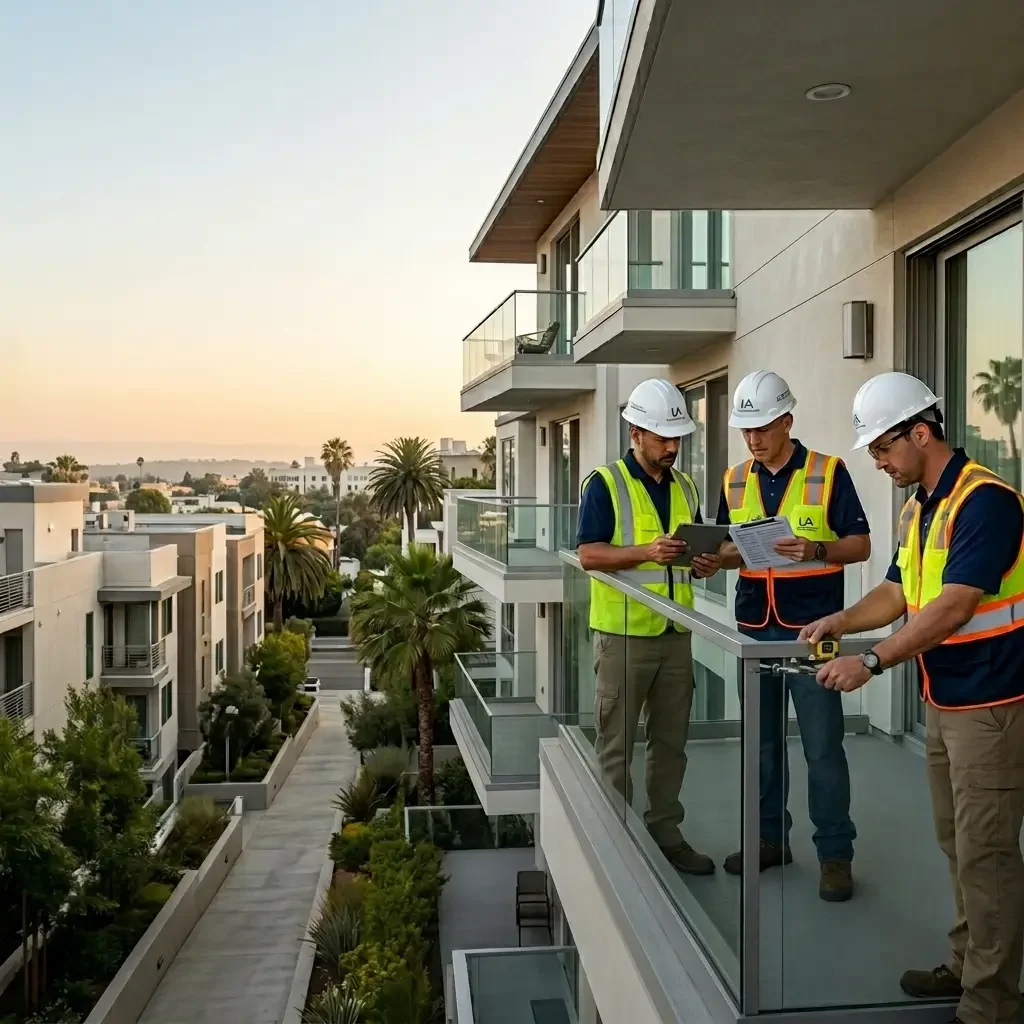
About us
Why Los Angeles Trusts Our Team.
Local Expertise
Deep understanding of Los Angeles building codes and LAHD reporting requirements.
Fast Turnaround
We deliver comprehensive, signed reports within 45 days of inspection completion.
Transparent Pricing
No hidden fees. We provide clear, upfront quotes based on your specific property needs.
376+ Projects
Licensed & ISO Certified
Experienced Team
What Does Balcony Inspection in Los Angeles Require for SB 721 and SB 326 Compliance?
Balcony inspection in Los Angeles requires a qualified inspector to evaluate exterior elevated elements, document unsafe conditions, and issue a written report for the responsible owner or HOA. California Health and Safety Code §17973 governs many multifamily apartment buildings, while Civil Code §5551 governs many condominium and HOA properties. Review California EEE safety and compliance requirements
What Does a Balcony Inspection in Los Angeles Include?
A balcony inspection in Los Angeles includes identification of qualifying exterior elevated elements, assessment of load-bearing components, review of associated waterproofing elements, and a signed written report. State law also requires direct visual examination, or a comparable evaluation method, on at least 15 percent of each element type.
Qualified inspectors examine balconies, decks, porches, stairways, walkways, and entry structures when they meet the legal definition. Inspectors evaluate structural supports, railings, fasteners, flashings, membranes, coatings, and sealants. The report establishes present condition, future performance expectations, further inspection needs, and emergency findings.
Which Los Angeles Properties Need a Balcony Inspection?
Los Angeles properties need a balcony inspection when state law covers the building type and the structure qualifies as an exterior elevated element. Health and Safety Code §17973 applies to buildings containing three or more multifamily dwelling units, while Civil Code §5551 applies to common interest developments such as many HOA and condominium projects. Identify structures constituting exterior elevated elements
Apartment-side responsibility usually falls on the building owner or the owner’s agent. HOA-side responsibility falls on the association. Mixed-use properties require a fact-specific legal and structural review. Two-unit properties often sit outside the apartment-side threshold in §17973.
What Is the Difference Between SB 721 and SB 326 in Los Angeles?
SB 721 covers many apartment buildings with three or more multifamily dwelling units, while SB 326 covers many condominium and HOA-governed common interest developments. The apartment law sits in Health and Safety Code §17973, and the HOA law sits in Civil Code §5551.
The current timing differs. Apartment inspections under the amended §17973 now point to comply with SB 721 apartment inspection mandates by January 1, 2026, then every six years after that. HOA inspections under §5551 point to Verify SB 326 HOA inspection rules by January 1, 2025, then every nine years after that.
What Counts as an Exterior Elevated Element in Los Angeles?
An exterior elevated element is a balcony, deck, porch, stairway, walkway, or entry structure that extends beyond an exterior wall, stands more than six feet above ground, supports human use, and relies in whole or substantial part on wood or wood-based products for support.
The legal definition includes supports and railings. The legal definition also includes associated waterproofing elements that protect the load-bearing path through waterproofing. Flashings, membranes, coatings, and sealants belong to that waterproofing system.
What Components Does a Qualified Inspector Check During a Balcony Inspection?
A qualified inspector checks load-bearing members, structural connections, edge protection, and waterproofing components because each part affects safety and compliance status. The required assessment focuses on the current condition of the exterior elevated element and the protective systems that shield structural members from water damage.
Load-bearing review usually includes joists, beams, posts, ledger connections, and fasteners. Load-bearing review usually includes joists, beams, posts, ledger connections, and fasteners. Inspectors evaluate concealed framing via borescope testing when direct visibility is limited. Edge-protection review includes guardrails and attachments. Waterproofing review includes flashings, membranes, coatings, sealants, and transitions. Surface review includes cracks, ponding, soft spots, staining, and visible deterioration.
Not sure whether the building falls under SB 721 or SB 326?
Testimonials
What Our Clients Say
Property Owner, Los Angeles
We were preparing for a full inspection, but the review showed our property was exempt. That saved us a major expense and gave us clarity right away.

Michael O.
Real Estate Broker, San Diego
Our buyer’s lender requested SB 721 documentation. The team quickly clarified that the building fell under SB 326 instead, and the transaction stayed on schedule.

Michelle C.
Duplex Owner, Pasadena
We assumed our duplex needed a full SB 721 inspection. Instead, we received clear exemption confirmation and documentation we could share with our insurer.

Rafael A.
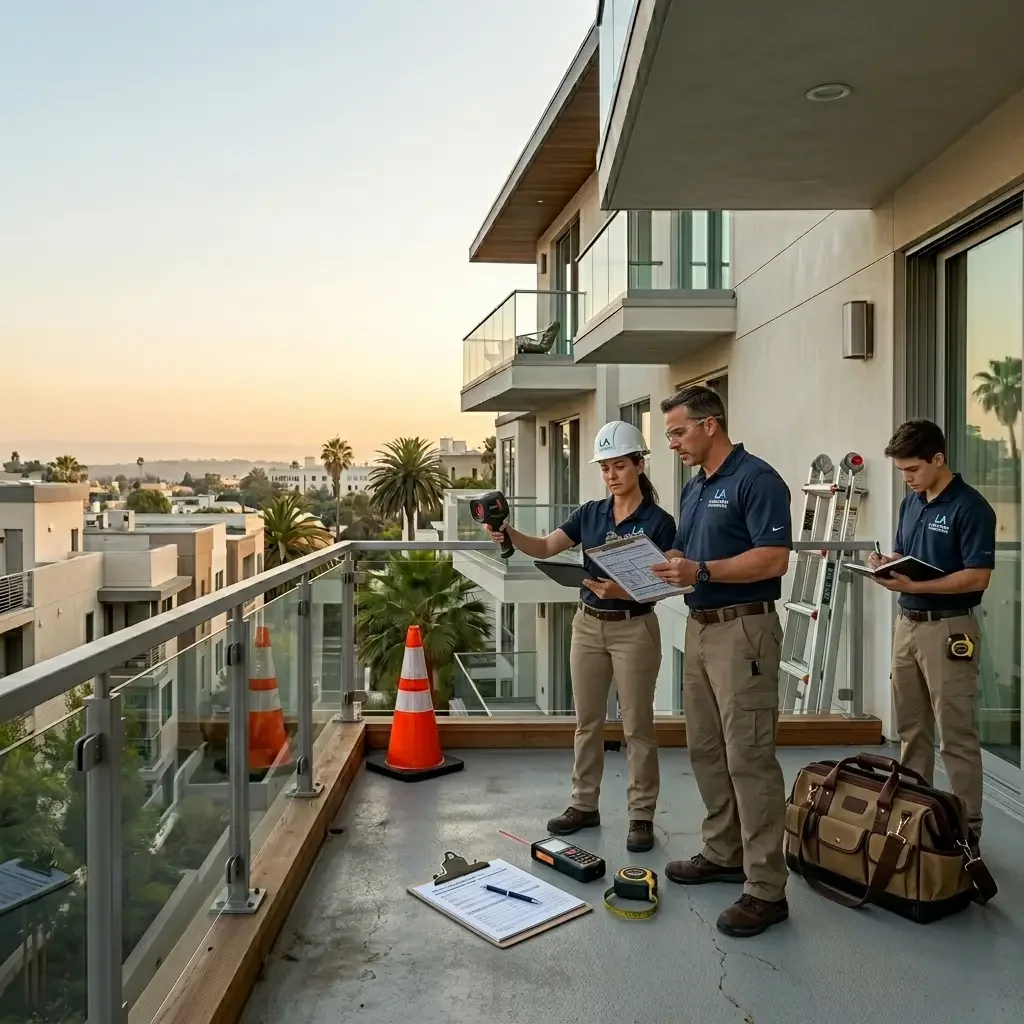
100% Compliance Rate
Proven & Trusted
Reliable Balcony Inspections for Los Angeles Properties
Property owners, HOA boards, and managers across Los Angeles rely on clear balcony inspection reporting, accurate code guidance, and practical next steps. From initial evaluation to repair planning, every inspection helps move the property closer to safety and compliance.