
376 Inspections Done
AB 2579 Deadline Extension California: SB 721 Initial Inspection Deadline Now January 1, 2026
What is the AB 2579 deadline extension in California?
AB 2579 extends the initial SB 721 inspection deadline to January 1, 2026 for qualifying multifamily buildings with exterior elevated elements. Health and Safety Code § 17973 still governs inspections, reports, repairs, and enforcement in California multifamily settings. AB 2579 amends the SB 721 timeline, but it does not change SB 326 for condominium or HOA common-interest developments.
California property owners need four core answers about AB 2579. Owners need the new deadline, the covered property type, the covered structures, and the difference between SB 721 and SB 326. California AB 2579 sets the initial inspection deadline at January 1, 2026. SB 721 applies to multifamily buildings with three or more dwelling units. Exterior elevated elements include balconies, decks, stairways, walkways, porches, and similar elevated exterior structures. SB 326 remains a separate law for condominium and HOA contexts.
What changed under AB 2579?
AB 2579 changes the initial SB 721 inspection date to January 1, 2026. SB 721 still governs property scope, inspector qualifications, inspection reports, repair timelines, enforcement triggers, and the six-year cycle. AB 2579 changes timing but does not alter the existing framework for owners who must comply with SB 721 apartment inspection mandates by the new deadline.
AB 2579 replaces January 1, 2025 with January 1, 2026 for the initial inspection deadline. AB 2579 also preserves prior-inspection relief for certain properties inspected within the three years before January 1, 2019.
| Requirement | Prior deadline | Current deadline |
| Initial SB 721 inspection deadline | January 1, 2025 | January 1, 2026 |
Which properties must comply under SB 721?
SB 721 applies to qualifying multifamily buildings with three or more dwelling units. Covered properties also contain exterior elevated elements. AB 2579 extends the initial inspection timing for those buildings under Health and Safety Code § 17973 in California. Owners confirm both conditions before scheduling.
Property owners hold the primary compliance duty. Property managers coordinate scheduling, documentation, and vendor steps. Common-interest developments fall outside this section and follow the separate SB 326 branch.
| Property type | Covered on this page | Governing branch |
| Apartment building with 3+ units | Yes | SB 721 / AB 2579 |
| Rental multifamily property with 3+ units | Yes | SB 721 / AB 2579 |
| Condominium common-interest development | No | SB 326 comparison branch |
| HOA common areas | No | SB 326 comparison branch |
What counts as an exterior elevated element?
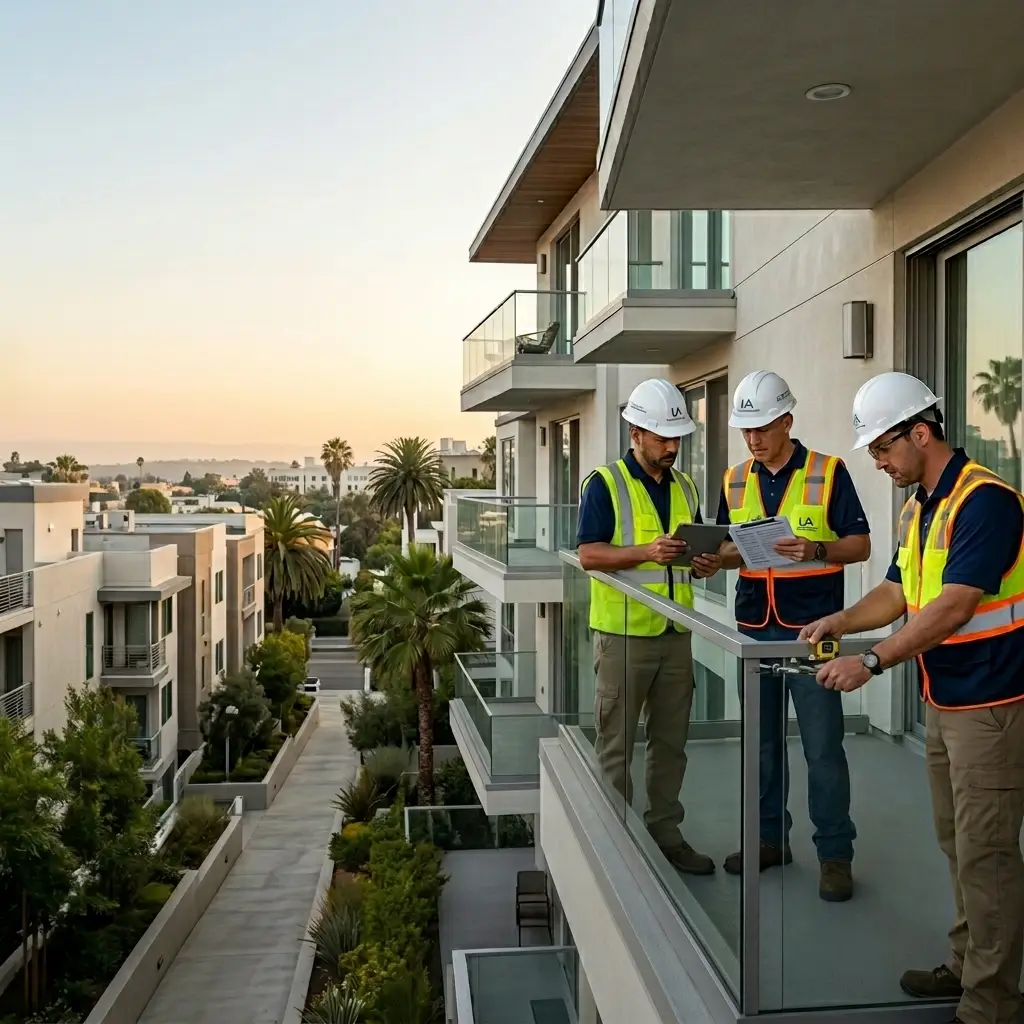
Exterior elevated elements include balconies, decks, porches, stairways, and walkways. The category also includes similar exterior structures that extend beyond exterior walls. The inspection framework evaluates structural support, waterproofing, deterioration exposure, and related safety risks across those elements. Inspectors assess visible damage patterns. Building owners must identify structures constituting exterior elevated elements over six feet high to determine their total inspection population.
Exterior elevated elements form the core regulated object. Inspectors evaluate load-bearing components, waterproofing, and deterioration risks such as moisture intrusion, wood decay, dry rot, and corrosion. Licensed professionals utilize forensic tools to detect water intrusion using moisture mapping behind finished surfaces like stucco or siding.
| Main entity | Related components or conditions |
| Balcony | load-bearing framing, waterproofing, guardrails |
| Deck | structural framing, drainage, flashing |
| Stairway | handrails, support framing, weather exposure |
| Walkway | elevated supports, waterproofing, corrosion risk |
| Porch | framing, moisture intrusion, structural integrity |
Who can perform the required inspection?
Qualified inspectors include licensed architects, civil engineers, structural engineers, certain licensed contractors, and accepted certified inspectors or officials. Local jurisdiction acceptance determines whether a certified inspector or official qualifies for the assignment. Qualified inspectors produce the report that triggers the next compliance step. Property managers should request a licensed SB 721 inspection quote from an authorized firm to secure a compliance spot before the January 2026 rush.
Qualified inspectors perform the inspection role inside the compliance framework. Qualified inspectors evaluate the regulated elements and produce the inspection report that triggers the next compliance step.
What happens after the inspection?
Inspection reports trigger the next legal path after the inspection. Immediate hazards require urgent owner action and local notice. Nonemergency findings trigger permit, repair, documentation, and follow-through deadlines under the enforcement framework. Owners track each deadline carefully in writing daily.
Inspection reports document findings and recommendations. Local enforcement agencies receive emergency reports, grant time extensions, impose penalties, and support further enforcement when owners fail to complete required follow-up work.
| Step | Trigger | Result |
| 1. Confirm applicability | Building has 3+ multifamily units | SB 721 path applies |
| 2. Hire inspector | Covered EEE present | Inspection begins |
| 3. Receive report | Inspection completes | Findings documented |
| 4. Address immediate hazard | Threat appears in report | Owner acts immediately and local notice follows |
| 5. Apply for permit | Nonemergency repairs required | Permit due within 120 days |
| 6. Complete repairs | Permit approved | Repairs due within 120 days unless extended |
What repair deadlines apply after the report?
Nonemergency repair findings require a permit application within 120 days after report receipt. Repairs conclude within 120 days after permit approval. Local enforcement agencies grant more time when statutory conditions support an extension request or approved schedule. Written records support that request.
Repair deadlines follow the inspection report. Repair deadlines do not replace the January 1, 2026 inspection date. The inspection deadline and the repair deadline are separate compliance stages.
What penalties or enforcement risks follow noncompliance?
Local enforcement agencies impose civil penalties of $100 to $500 per day for incomplete required repairs. Local agencies grant additional time when statutory conditions support an extension. Local jurisdictions also record a building safety lien after continued noncompliance. Enforcement risk increases after delay.
Local jurisdictions may also record a building safety lien. Local agencies operate as reporting authorities, extension authorities, and enforcement authorities inside the AB 2579 compliance path.
Does AB 2579 include prior-inspection relief?
AB 2579 includes prior-inspection relief for certain previously inspected properties. A qualifying property inspected within the three years before January 1, 2019 waits until January 1, 2026 for the next inspection. The earlier report must show proper working condition and no safety threat.
Prior-inspection relief clarifies scheduling for owners. Prior-inspection relief also supports eligibility screening before vendors quote inspection work.
How does AB 2579 differ from SB 326?
AB 2579 extends the SB 721 initial inspection deadline for qualifying multifamily buildings. SB 326 remains a separate law for condominium and HOA common-interest developments. Common-interest developments remain under a separate legal branch, and boards should verify SB 326 HOA inspection rules to avoid past-due penalties.
SB 721 and SB 326 create recurring user confusion in search results. The strongest page architecture therefore includes a dedicated comparison block instead of burying the distinction in the FAQ.
| Topic | SB 721 / AB 2579 | SB 326 |
| Main property type | Multifamily buildings with 3+ units | Condo / HOA common-interest developments |
| Deadline issue on this page | Initial inspection moved to January 1, 2026 | Not changed by AB 2579 |
| Main user concern | Apartment compliance | HOA or condo compliance |
What records must owners keep?
Owners must keep inspection reports for at least two inspection cycles. Owners must also disclose those reports to a buyer during a later sale. Record retention supports compliance documentation, transaction disclosure, enforcement response, and later buyer review. Buyers also review prior findings.
What does a property owner do now?
Property owners need a direct compliance path before January 1, 2026. The sequence starts with scope confirmation and element identification. The sequence ends with permits, repairs, recordkeeping, and post-report follow-through for covered properties. Calendar control reduces missed compliance steps materially.
- Confirm the property type and unit count.
- Identify balconies, decks, stairways, walkways, porches, and similar exterior elevated elements.
- Review whether prior-inspection relief applies.
- Hire a qualified inspector.
- Organize reports, notices, and compliance records.
- Complete permit and repair steps after the report if defects appear.
Reviewing California SB 721 and SB 326 project success stories helps owners select the most experienced forensic engineering partner.
Compliance Deadlines
Stay ahead of California's statutory inspection requirements.
The initial deadline has passed. HOA properties that have not completed their first inspection are currently out of compliance.
Extended by AB 2579. Qualifying multifamily apartments must complete their first safety inspection by this new date.
About us
Why Los Angeles Trusts Our Team.
Local Expertise
Deep understanding of Los Angeles building codes and LAHD reporting requirements.
Fast Turnaround
We deliver comprehensive, signed reports within 45 days of inspection completion.
Transparent Pricing
No hidden fees. We provide clear, upfront quotes based on your specific property needs.
376+ Projects
Licensed & ISO Certified
Experienced Team
Authorized Inspectors
Inspector eligibility depends on the governing statute.
| Inspector Category | SB 721 (Apartments) | SB 326 (HOAs) |
|---|---|---|
| Licensed Architects | ✓ | ✓ |
| Licensed Civil Engineers | ✓ | ✓ |
| Licensed Structural Engineers | ✓ | ✓ |
| Qualifying Contractors (A, B, C-5) | ✓ | — |
| Certified Building Inspectors | ✓ | — |
*SB 326 inspector qualifications are stricter, limited primarily to licensed design professionals. AB 2114 added civil engineers to the HOA pool.
Reporting & Repair Obligations
Statutory requirements for documentation and corrective actions.
Written Reports
SB 721 requires a written report within 45 days of inspection. SB 326 reports must be retained for two inspection cycles.
Urgent Escalation
Immediate safety threats require urgent-condition notice to the owner and enforcement agency. Emergency conditions demand immediate action.
Repair Deadlines
For SB 721, permit applications for non-emergency repairs must be submitted within 120 days of identifying defects.