
376 Inspections Done
Find hidden balcony damage before it turns into a costly repair.
What is borescope testing for Exterior Elevated Elements?
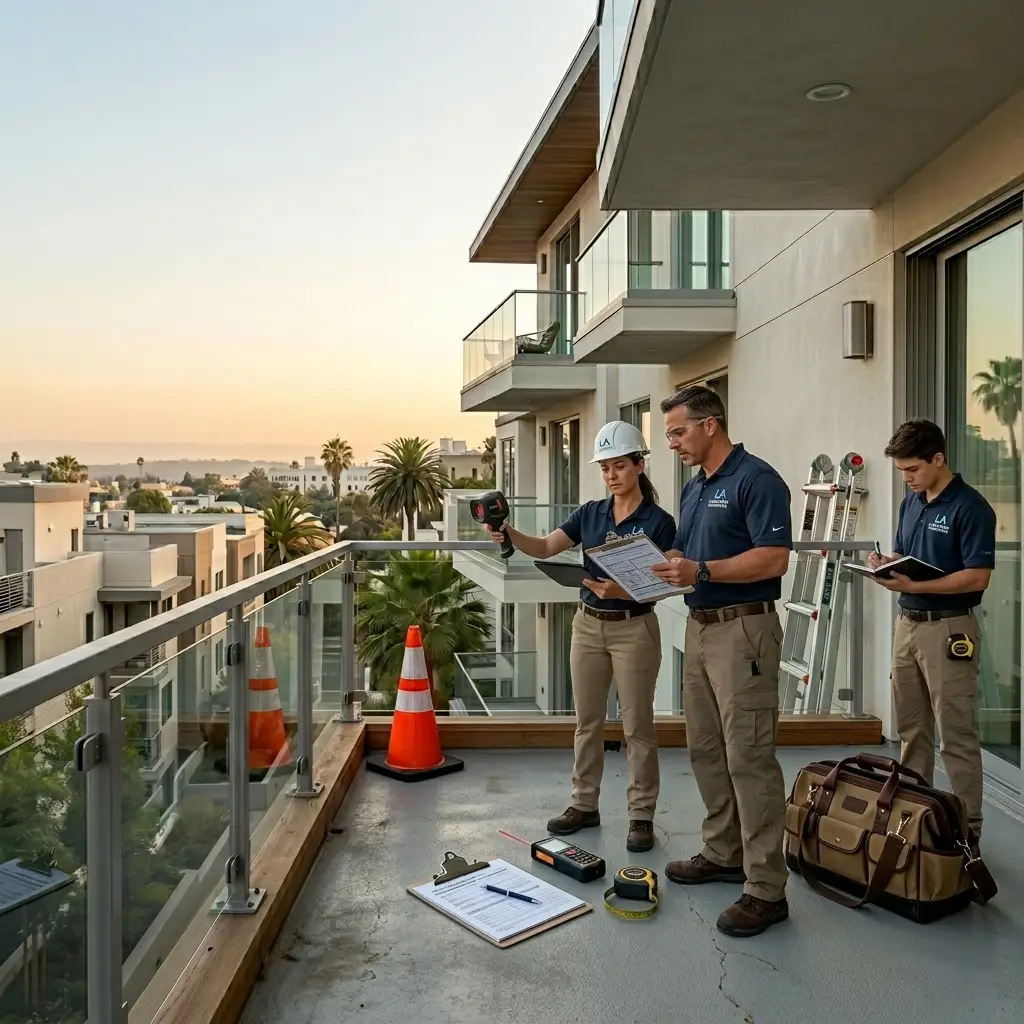
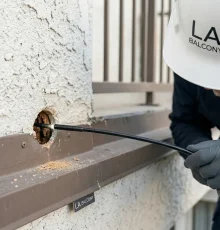
Borescope testing is a camera-assisted inspection method for concealed EEE cavities. The tool enters through a small opening. The inspector reviews framing, connections, and nearby waterproofing layers to evaluate structural safety through load-bearing path analysis without broad demolition.
California EEE inspections use borescopes when surface observations leave hidden conditions unresolved, requiring owners to review California EEE safety and compliance requirements while limiting disruption to finishes.
What counts as an Exterior Elevated Element in California?
Exterior Elevated Elements include elevated balconies, decks, stairways, walkways, landings, and similar structures. California law focuses on elements that extend beyond exterior walls, sit over six feet above grade, and rely on wood-based structural support.
Health and Safety Code §17973 defines EEE elements for multifamily rental properties that must comply with SB 721 apartment inspection mandates. Civil Code §5551 uses parallel load-bearing and waterproofing concepts for condominium associations that verify SB 326 HOA inspection rules.
Load-bearing components, rail attachments, membranes, flashings, coatings, and sealants all affect safety. Exterior Elevated Element inspections therefore address more than the walking surface.
Why do inspectors use borescopes during EEE inspections?
Inspectors use borescopes to verify hidden moisture damage and concealed deterioration. Water intrusion often starts behind finishes. Inspectors use borescopes to verify hidden moisture damage and detect water intrusion using moisture mapping behind finished surfaces like stucco.
Exterior distress often appears at cracks, edges, railing penetrations, and failed transitions. Concealed framing, fasteners, and sheathing therefore receive focused review when surface evidence points inward.
Is borescope testing legally required under SB 326 or SB 721?
Borescope testing is not a universal requirement for every EEE inspection. California law allows professional judgment. The inspection method depends on property type, observed conditions, and the scope needed for reliable evaluation.
Civil Code §5551 defines visual inspection as the least intrusive method necessary and lists moisture meters, borescopes, and infrared technology as examples. Health and Safety Code §17973 requires direct visual examination or comparable means for at least 15 percent of each EEE type.
SB 326 still carries the first inspection deadline of January 1, 2025. HSC §17973 now requires apartment inspections by January 1, 2026, after the 2025 amendment to that statute.
When is borescope testing usually used?
Borescope testing usually follows visible red flags or elevated moisture evidence. Typical triggers include staining, softness, movement, cracked finishes, failed sealant lines, failed flashing transitions, and suspicious moisture readings.
Visual-only review fits lower-risk conditions. Borescope review fits unresolved concealed-risk questions. Larger openings fit cases where interior evidence points to broader structural loss.
What defects does borescope testing reveal?
Borescope testing reveals hidden moisture intrusion, decay, corrosion, cracking, and connection distress. The images often expose fungal damage, waterproofing failures, and insect-related deterioration inside enclosed assemblies.
High-definition camera images expose section loss and allow engineers to identify structural decay through dry rot detection in wood members.
Early concealed findings matter because structural reliability often drops before surface failure becomes obvious. Borescope images therefore improve timing for repair design and safety planning.
How does the borescope inspection process work?
The borescope process starts with exterior review and targeted moisture screening. The inspector then uses a small access point, captures interior images, and records visible conditions in field notes and photographs.
Inspection records include observed distress, borescope images, test results, and the location of each reviewed area. Further invasive investigation follows when the interior view remains limited or the evidence shows deeper deterioration.
How does borescope testing relate to sampling requirements?
Sampling rules do not require identical concealed inspection at every element. SB 326 uses a random statistically significant sample. HSC §17973 requires inspection of at least 15 percent of each EEE type.
Professional judgment still controls escalation. Sample findings that show distress often expand the review scope so the owner receives a reliable picture of risk and repair needs.
Who can perform borescope-related EEE inspections in California?
Qualified California inspectors depend on the statute that governs the property. SB 326 inspections belong to licensed structural engineers, licensed civil engineers, or architects. HSC §17973 also allows listed contractors and certain certified inspectors.
Property type therefore drives the licensing path. Inspection authority stays tied to the current statute, the local jurisdiction, and the inspector’s qualifying credentials.
Selecting a qualified licensed professional ensures compliance, and owners often review California SB 721 and SB 326 project success stories before engagement.
What appears in the inspection report?
The inspection report states the reviewed components, present condition, and repair direction. California law also requires narrative, photographs, and test results sufficient to create a future comparison baseline.
Health and Safety Code §17973 requires a stamped or signed report within 45 days after completion. Immediate threat findings also trigger urgent owner notice and local agency notice under the statute.
Civil Code §5551 now requires first-page project counts and a certification statement for condominium reports. Record retention remains part of both compliance paths.
What are the limits of borescope testing?
Borescope testing provides a limited interior view rather than a full structural diagnosis. Small openings do not expose every wet area, failed connection, or hidden load path issue across an assembly.
Access restrictions, finish layers, and cavity geometry also narrow the view. Further exposure becomes necessary when the borescope record stays inconclusive or the images show advanced deterioration.
Statutory references used in this page:
California Civil Code §5551, as amended effective January 1, 2026, defines HOA visual inspection and lists borescopes as an example tool.
California Health and Safety Code §17973, as amended effective June 30, 2025, requires direct visual examination or comparable means and a 15 percent sample for covered multifamily properties.
About us
Why Los Angeles Trusts Our Team.
Local Expertise
Deep understanding of Los Angeles building codes and LAHD reporting requirements.
Fast Turnaround
We deliver comprehensive, signed reports within 45 days of inspection completion.
Transparent Pricing
No hidden fees. We provide clear, upfront quotes based on your specific property needs.
376+ Projects
Licensed & ISO Certified
Experienced Team
Authorized Inspectors
Inspector eligibility depends on the governing statute.
| Inspector Category | SB 721 (Apartments) | SB 326 (HOAs) |
|---|---|---|
| Licensed Architects | ✓ | ✓ |
| Licensed Civil Engineers | ✓ | ✓ |
| Licensed Structural Engineers | ✓ | ✓ |
| Qualifying Contractors (A, B, C-5) | ✓ | — |
| Certified Building Inspectors | ✓ | — |
*SB 326 inspector qualifications are stricter, limited primarily to licensed design professionals. AB 2114 added civil engineers to the HOA pool.
Reporting & Repair Obligations
Statutory requirements for documentation and corrective actions.
Written Reports
SB 721 requires a written report within 45 days of inspection. SB 326 reports must be retained for two inspection cycles.
Urgent Escalation
Immediate safety threats require urgent-condition notice to the owner and enforcement agency. Emergency conditions demand immediate action.
Repair Deadlines
For SB 721, permit applications for non-emergency repairs must be submitted within 120 days of identifying defects.
FAQ
Is borescope testing destructive?
Borescope testing is minimally invasive. The method usually uses a small access point instead of broad finish removal.
Do moisture meters or infrared cameras replace a borescope?
Moisture meters and infrared tools screen for risk. Borescope review supplies direct interior images when concealed verification matters.
Does every balcony need borescope access?
Every balcony does not receive the same concealed review. Property conditions and legal sampling rules shape the scope.
What happens after an inconclusive borescope result?
Inconclusive results lead to further engineering review or larger openings so concealed structural conditions receive direct exposure.
Who keeps the inspection records?
The property owner, association, or responsible management party retains inspection records for future compliance and comparison.