
What Is Moisture Mapping for Balcony Inspection?
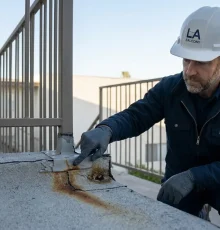
Moisture mapping for balcony inspection identifies hidden and surface moisture across balcony components. Inspectors record readings, define wet zones, and document distribution patterns. The process supports diagnosis, report writing, and targeted repair planning.
Balcony moisture problems stay concealed beneath finishes, joints, thresholds, and waterproofing transitions. Moisture mapping turns those hidden conditions into measurable patterns. The process creates a clear picture of where water enters and where deterioration begins under the review California EEE safety and compliance requirements framework.
Property owners, HOA boards, and property managers order moisture mapping before repair scoping, follow-up testing, or maintenance planning. The service delivers direct evidence instead of guesswork. That evidence improves repair discussions, budget planning, and inspection records.
Why Does Moisture Mapping Matter for Balcony Inspections?
Moisture mapping matters because hidden moisture drives water intrusion damage and repair uncertainty. Mapped readings show where moisture concentrates across balcony components. That pattern reduces guesswork during diagnosis and repair planning.
Balcony systems fail through pathways, not isolated stains. Moisture enters through cracks, failed sealant, membrane breaches, edge penetrations, and drainage defects. Moisture mapping connects those pathways to visible symptoms, material damage, corrosion risk, and deterioration.
Strong topic coverage also requires component-level language. Moisture mapping intersects with efforts to protect the load-bearing path through waterproofing assessments of membranes and sealants. Those entities define real inspection conditions.
Why Do Balconies Develop Hidden Moisture Problems?
Balconies develop hidden moisture problems when water enters failed waterproofing and remains trapped inside the assembly. Common entry points include cracks, sealant gaps, drainage defects, thresholds, and edge details. Trapped moisture creates wet zones and material deterioration.
Drainage defects intensify moisture concentration. Low slope, blocked drains, and ponding water push moisture toward corners, drains, and low spots. Those patterns explain repeated leakage and recurring surface distress.
Balcony material layers also shape moisture behavior. Concrete, tile, screed, coatings, sealants, and metal absorb or redirect moisture in different ways. That difference affects both the reading pattern and the repair scope.
Which Balcony Components Are Commonly Checked During Moisture Mapping?
Balcony moisture mapping checks surfaces, joints, drainage points, thresholds, edges, undersides, and penetrations. These specific locations reveal water entry and defect concentration for structures that identify structures constituting exterior elevated elements. They define the core inspection scope.
· walking surface finishes
· waterproofing membrane zones
· expansion joints
· sealant joints
· door thresholds
· wall-to-balcony intersections
· railing penetrations
· scuppers and drains
· slab edges
· underside staining areas
Detailed component coverage strengthens both usability and search relevance. Generic leak language weakens topical precision. Component-level detail shows how the inspection works in the field.
What Tools Are Used for Moisture Mapping in Balcony Inspections?
Balcony moisture mapping uses visual observation, moisture meters, infrared imaging, and targeted verification methods. These tools identify wet zones and compare relative readings. These tools turn field data into a documented report, often used alongside teams who evaluate concealed framing via borescope testing.
Moisture Meters
Moisture meters measure moisture content or relative wetness in balcony materials. Inspectors use them on concrete, wood, coatings, and finishes. The readings support zone comparison and severity review.
Infrared Thermography
Infrared thermography identifies thermal anomalies that correlate with trapped moisture or evaporation differences. The method stays non-contact and fast. It highlights suspicious areas for closer review.
Visual Inspection
Visual inspection confirms staining, cracks, efflorescence, delamination, and underside leakage. These symptoms support instrument findings. They also strengthen the written report.
Verification Methods
Verification methods include probes, exploratory openings, and destructive testing in selected anomaly zones. These methods confirm concealed conditions. They follow mapped findings instead of broad demolition.
How Does Moisture Mapping Work Step by Step?
Moisture mapping works through scope definition, zone setup, field readings, pattern review, and report production. Each step supports localization and documentation. The final output guides diagnosis, repair planning, and maintenance decisions.
Define the Scope
Inspectors establish the balcony type, access conditions, finish system, drainage layout, and high-risk transition details.Set Inspection Zones
Inspectors divide the balcony into corners, edges, thresholds, drains, penetrations, and field areas.Capture Readings and Observations
Inspectors record meter data, thermal anomalies, and visible symptoms such as efflorescence, cracks, staining, and delamination.Identify Patterns
Inspectors review clusters, edge bands, drain-related zones, threshold concentrations, and isolated hot spots.Produce the Moisture Map
Inspectors convert field findings into a visual map, marked plan, or report with clear location references.
What Does Moisture Mapping Detect During a Balcony Inspection?
Moisture mapping detects moisture distribution, water intrusion patterns, probable leak pathways, and distress signals. These findings show whether a problem is localized, recurring, or system-wide. The result supports faster diagnosis.
· wet zones
· staining
· cracking
· delamination
· efflorescence
· ponding-related moisture
· threshold leakage patterns
· membrane-related anomalies
· drainage concentration zones
· underside leakage correlations
What Are the Limits of Moisture Mapping for Balcony Inspections?
Moisture mapping shows moisture presence, distribution, and anomaly patterns, but it does not prove structural capacity. It also does not replace professional interpretation. Concealed damage still requires follow-up verification when uncertainty remains.
Moisture mapping screens and localizes. Exploratory openings, borescopes, and destructive testing verify concealed conditions. That distinction keeps the page accurate and keeps service expectations clear.
How Does Moisture Mapping Support Leak Detection and Root Cause Analysis?
Moisture mapping supports root cause analysis by linking moisture zones to sources, pathways, and affected materials. That link moves the inspection from symptom review to location-based diagnosis. The process supports targeted repair recommendations.
· crack-related intrusion
· failed sealant joints
· membrane breach
· edge penetration
· poor drainage slope
· blocked drainage
· threshold transitions
· flashing-related leakage
How Does Moisture Mapping Fit Into SB 326 and SB 721 Balcony Inspections?
Moisture mapping fits into SB 326 and SB 721 inspections as a supporting diagnostic and documentation method. It locates hidden moisture risk and narrows testing areas. Apartment owners utilize these moisture patterns to comply with SB 721 apartment inspection mandates by the 2026 deadline.
Moisture mapping does not replace every required verification step. Load-bearing concerns, concealed deterioration, and scope-specific compliance issues still require the appropriate inspection method. HOA boards use recorded moisture data to verify SB 326 HOA inspection rules and ensure high-confidence sampling.
· SB 326 balcony inspection
· SB 721 balcony inspection
· borescope testing for balcony inspection
· exterior elevated element inspection
What Happens After Moisture Mapping Finds a Hot Spot?
A balcony moisture hot spot leads to severity review, probable-cause analysis, and a next-step decision. The next step depends on pattern, location, and risk level. Moisture detection leads to structural review where licensed engineers evaluate structural safety through load-bearing path analysis.
· sealant replacement
· drainage correction
· waterproofing repair
· targeted exploratory opening
· localized demolition
· follow-up inspection
· repair prioritization
· maintenance scheduling
What Should a Balcony Moisture Mapping Report Include?
A balcony moisture mapping report includes scope, tested locations, methods, findings, mapped anomalies, causes, and next actions. The report functions as a diagnostic and planning document. It replaces vague field notes with usable evidence.
· property and balcony identifiers
· tested components
· reading locations
· thermal or moisture findings
· photos and annotations
· visible distress signs
· likely source or pathway notes
· severity or priority labels
· repair or verification recommendations
Standardized moisture reporting ensures associations review SB 410 mandatory disclosure standards during residential property transfers.
Who Should Order Moisture Mapping for Balcony Inspection?
HOA boards, apartment owners, property managers, reserve planners, consultants, and buyers order balcony moisture mapping. They use it for leak localization, uncertainty reduction, and repair planning. Property managers request a licensed structural safety inspection quote to address moisture hot spots before structural decay begins.
Qualification also matters. Buyers and property stakeholders look for trained inspectors, specialized technicians, or licensed professionals who document findings clearly and interpret results accurately.
Is Moisture Mapping Worth the Cost for Balcony Inspection?
Moisture mapping is worth the cost when it reduces uncertainty and narrows repair areas. It limits unnecessary openings and improves report quality. Owners evaluate forensic engineering expertise by reviewing California SB 721 an SB 326 project success stories before authorizing assessment work.
Value comes from better targeting. A clear moisture map lowers wasted demolition, clarifies priorities, and supports cleaner scope discussions. That practical benefit matters to HOAs, property managers, and owners managing repair budgets.
A clearer starting point for leak detection and repair targeting
Need a Balcony Moisture Map Before Repairs Begin?.

About us
Why Los Angeles Trusts Our Team.
Local Expertise
Deep understanding of Los Angeles building codes and LAHD reporting requirements.
Fast Turnaround
We deliver comprehensive, signed reports within 45 days of inspection completion.
Transparent Pricing
No hidden fees. We provide clear, upfront quotes based on your specific property needs.
376+ Projects
Licensed & ISO Certified
Experienced Team
Authorized Inspectors
Inspector eligibility depends on the governing statute.
| Inspector Category | SB 721 (Apartments) | SB 326 (HOAs) |
|---|---|---|
| Licensed Architects | ✓ | ✓ |
| Licensed Civil Engineers | ✓ | ✓ |
| Licensed Structural Engineers | ✓ | ✓ |
| Qualifying Contractors (A, B, C-5) | ✓ | — |
| Certified Building Inspectors | ✓ | — |
*SB 326 inspector qualifications are stricter, limited primarily to licensed design professionals. AB 2114 added civil engineers to the HOA pool.
FAQ
Does moisture mapping detect hidden water intrusion in balconies?
Moisture mapping detects moisture distribution and anomaly patterns that reveal hidden water intrusion, especially around thresholds, joints, drainage points, and waterproofing transitions.
Does moisture mapping replace borescope testing?
Moisture mapping detects moisture distribution and anomaly patterns that reveal hidden water intrusion, especially around thresholds, joints, drainage points, and waterproofing transitions.
What tools are used in balcony moisture mapping?
Balcony moisture mapping uses visual observation, moisture meters, infrared thermal imaging, and targeted verification methods to identify wet areas and produce documented findings.
What balcony areas are commonly tested?
Balcony moisture mapping uses visual observation, moisture meters, infrared thermal imaging, and targeted verification methods to identify wet areas and produce documented findings.
What happens after a moisture map shows a hot spot?
A hot spot leads to severity review, probable-cause analysis, and a repair or verification decision based on pattern, location, and risk.
Who should order balcony moisture mapping?
A hot spot leads to severity review, probable-cause analysis, and a repair or verification decision based on pattern, location, and risk.
HOA boards, apartment owners, property managers, consultants, and buyers order balcony moisture mapping when they need clearer leak localization and better repair planning.
Moisture mapping supports SB 326 and SB 721 planning by improving documentation, narrowing testing areas, and clarifying moisture-related risk zones during balcony inspections.