
What Is the History of the Berkeley Balcony Collapse?
The Berkeley balcony collapse is the June 16, 2015 failure of a fifth-floor balcony at the Library Gardens apartment complex in Berkeley, California, during a birthday gathering that kills six people, injures seven others, triggers criminal and civil investigations, and later drives major balcony-inspection reform in California.
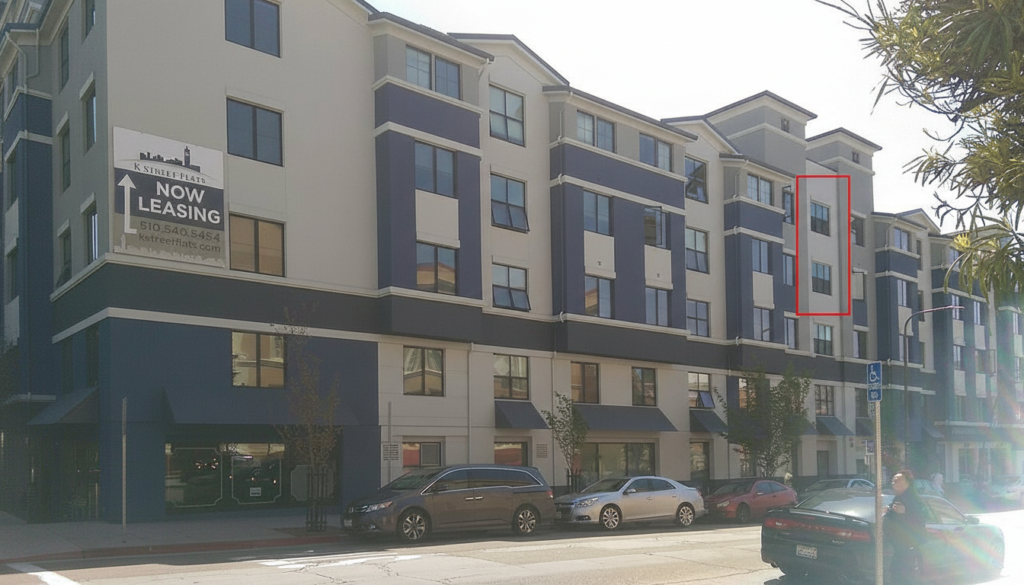
Library Gardens stands at 2020 Kittredge Street in downtown Berkeley. The collapse happens shortly after midnight during a 21st birthday party. The event draws global attention because most victims are Irish J-1 students spending the summer in the United States. Similar failures now sit inside the broader compliance context covered in California EEE Safety Compliance.
Berkeley balcony collapse history includes three layers. Berkeley balcony collapse history includes the human toll, the technical cause chain, and the legal and policy aftermath. That mix makes the event a landmark case in balcony and deck safety history, especially for Exterior Elevated Elements and Balconies, Decks, Porches, Stairs.
When and Where Does the Berkeley Balcony Collapse Happen?
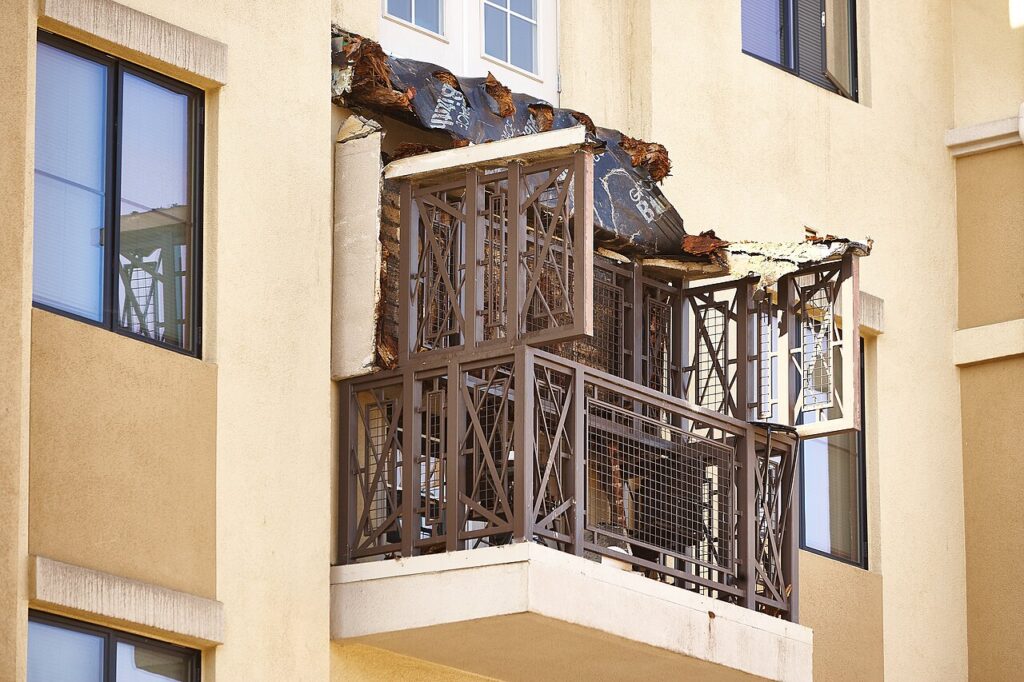
The Berkeley balcony collapse happens shortly after midnight on June 16, 2015, at the Library Gardens apartment complex at 2020 Kittredge Street in Berkeley, California, on a fifth-floor exterior wood-framed balcony where 13 people gather during a birthday celebration.
June 16, 2015 anchors every serious account of the event. Library Gardens provides the site. Berkeley provides the city context. Fifth-floor balcony failure defines the exact structural event. Birthday gathering explains the moment of occupancy. The failed assembly also fits the risk category discussed under Exterior Elevated Elements.
Library Gardens enters public memory because the building is relatively new. Library Gardens had been completed around 2007. Building age becomes a central question because hidden decay appears in a structure that is about eight years old.
Who Dies and Who Survives After the Collapse?
The collapse kills Olivia Burke, Ashley Donohoe, Eoghan Culligan, Niccolai Schuster, Lorcán Miller, and Eimear Walsh at the scene, injures seven other people, and later remains linked to the 2022 death of survivor Aoife Beary after complications tied to the injuries.
Irish J-1 students shape the public identity of the tragedy. Irish J-1 students make the collapse an international story in both California and Ireland. Irish families, survivors, and public officials remain central voices in the years that follow.
Aoife Beary becomes part of the long-term history. Aoife Beary survives the initial fall, suffers severe injuries, and later dies in 2022 from complications linked to the collapse. Long-term aftermath extends the event beyond the night itself.
What Timeline Explains the History of the Berkeley Balcony Collapse?
The main timeline runs from Library Gardens construction in the 2000s, to the June 16, 2015 collapse, to mid-2015 investigations, to a March 2016 decision against criminal charges, to 2017 settlements, to 2018 SB 721 reform, and to Aoife Beary’s 2022 death.
Library Gardens is built in the 2000s as a downtown Berkeley apartment complex. June 16, 2015 marks the collapse during a birthday gathering. June 2015 reporting quickly points toward water damage, dry rot, and construction or sealing defects. Readers comparing the policy timeline with California compliance duties can review Balcony Laws and the later SB 721 inspection framework.
Alameda County District Attorney opens a criminal investigation in 2015. Inspection records become part of the public controversy because the balcony had passed a 2014 inspection. March 2016 brings a decision not to file criminal charges.
Civil cases move toward settlements in 2017. California enacts SB 721 in 2018 and formalizes recurring inspection requirements for certain exterior elevated elements in multifamily buildings. Aoife Beary’s death in 2022 deepens the event’s long-range historical meaning.
What Causes the Berkeley Balcony Collapse?
The collapse results from a concealed failure chain in which moisture intrusion enters the balcony assembly, trapped water degrades wood members, dry rot weakens the cantilevered joists, structural integrity drops over time, and ordinary occupancy load triggers sudden balcony detachment.
Moisture intrusion sits at the center of the cause analysis. Moisture intrusion damages the balcony assembly. Water damage spreads inside concealed wood components. Dry rot then weakens the wood joists that support the balcony. Readers studying that progression can move deeper into Waterproofing, Moisture Mapping, and Dry Rot Detection.
Waterproofing defects deepen the failure path. Waterproofing defects, flashing failures, and sealing errors allow water to penetrate and remain trapped. Construction choices then accelerate concealed decay in areas that normal visual review does not easily expose. Hidden conditions like these often require Borescope Testing or Destructive Testing to confirm the actual damage path.
Occupancy load matters as a trigger, not the root cause. Thirteen people stand on the balcony. A balcony built and protected correctly holds expected residential loads. Hidden deterioration turns a normal gathering into a fatal structural failure, which is why the Load-Bearing Path remains a critical inspection focus.
What Do Investigations Find After the Collapse?
Investigations focus on balcony materials, moisture exposure, construction quality, inspection history, and legal responsibility, and those investigations place hidden decay, waterproofing failure, and workmanship problems at the center of the case rather than treating crowd weight as the only explanation.
Berkeley officials begin reviewing the collapse soon after the event. Alameda County District Attorney opens a criminal probe. Forensic analysis examines failed materials, concealed framing, and the sequence that links trapped moisture to structural breakdown. Technical readers often follow this path from failure mechanism into Inspection Methods.
Inspection history becomes a major public issue. The balcony had passed a 2014 inspection. That fact intensifies concern about the limits of visual-only review when hidden internal decay develops behind finished surfaces.
Segue Construction and the California Contractors State License Board become major accountability entities in the aftermath. Regulatory scrutiny centers on accepted trade standards, waterproofing errors, workmanship, and later contractor license consequences. Enforcement-minded readers can connect that theme to LADBS Enforcement Task Forces inside your Los Angeles code section.
What Legal Aftermath Follows the Berkeley Balcony Collapse?
The legal aftermath includes wrongful death and personal injury lawsuits against parties tied to the building’s construction and management, a criminal review that ends without charges in March 2016, confidential civil settlements, and later contractor discipline through California licensing authorities.
Wrongful death lawsuits seek damages for the families of those killed. Personal injury lawsuits seek recovery for survivors. Premises liability, construction defects, prior notice, and maintenance failures become recurring legal themes. California readers who need the statute-level inspection response can move directly to SB 721.
Alameda County District Attorney reviews criminal liability after the tragedy. March 2016 ends that path without criminal charges. Public frustration remains because the event produces multiple deaths and clear evidence of severe hidden deterioration.
Civil cases later resolve through confidential settlements. Public reporting describes multimillion-dollar outcomes, yet full settlement totals remain opaque because several resolutions keep payment details private.
How Does the Collapse Change Balcony Inspection Law in California?
The collapse becomes a major policy trigger for Berkeley’s local Exterior Elevated Elements program and for California’s 2018 enactment of SB 721, which requires recurring inspection of certain wood-supported exterior elevated elements in multifamily buildings.
Berkeley tightens local rules after the tragedy. Berkeley later describes its Exterior Elevated Elements program as a model used statewide. Local reform helps move balcony safety from reactive enforcement to recurring inspection. Site visitors who need the broader California framework can review California EEE Safety Compliance and Balcony Laws.
California passes SB 721 in 2018. SB 721 applies to covered exterior elevated elements in multifamily housing. SB 721 establishes a six-year inspection cycle and a 15% sampling approach for each element type. The exact page match for that topic is SB 721.
Health and Safety Code §17973 becomes a key statutory reference in that reform framework. Licensed architects, structural engineers, and other qualified inspectors become central actors in the new inspection regime.
Why Does the Berkeley Balcony Collapse Remain Historically Significant?
The Berkeley balcony collapse remains historically significant because it exposes the danger of hidden moisture damage in wood balconies, shows the limits of visual-only inspection, ties construction quality directly to life safety, and reshapes public understanding of balcony regulation in California.
Berkeley balcony collapse history reaches beyond one apartment building. Berkeley balcony collapse history now functions as a case study in structural failure, accountability, premises liability, inspection reform, and collective memory. That breadth explains why the event continues to draw searches about cause, responsibility, and lessons. Readers who want a direct service path after reviewing the case can move from this article into Contact for inspection support.
Victim remembrance remains part of the historical record. Memorial interest, survivor updates, and public grief keep the event active in civic memory. Building-safety reform keeps the event active in law and inspection practice.
FAQ
What Else Do Readers Ask About the Berkeley Balcony Collapse?
Was the Balcony Over Capacity?
The balcony carries 13 people at the time of failure, yet the stronger explanation in the historical record centers on decayed structural members and trapped moisture, with occupancy weight acting as the final trigger rather than the sole root cause. Readers tracing that distinction further can study Load-Bearing Path and Dry Rot Detection.
Why Are Irish Students So Closely Associated With the Tragedy?
Irish students dominate public memory because most victims are young Irish J-1 students in California for summer work and travel, which turns the collapse into both a Berkeley disaster and an Irish national tragedy.
Did the Collapse Lead to New Inspection Rules?
The collapse helps drive Berkeley’s Exterior Elevated Elements program and California’s SB 721 framework, which formalizes recurring inspections for covered exterior elevated elements in multifamily housing. Direct readers to SB 721 for the law-specific page.
Why Does This Event Still Matter Today?
The event still matters because it links hidden moisture damage, construction defects, missed warning signs, human loss, legal accountability, and statewide inspection reform in one widely cited building-safety case. Readers who want the broader compliance framework can continue into California EEE Safety Compliance.